
News from vh-crossmedia
Completed projects and news from my work
Fresh on the net: Frey to the power of three!
For one of my most loyal customers I have successfully three customised landing pages which are specially designed for different product lines. These pages were specifically designed to optimally present the uniqueness and appeal of the respective devices. The design of the landing pages required a fine balance between a consistent design that emphasises the brand identity and an individual layout that highlights the uniqueness and appeal of the products. The key component is to skilfully integrate the brand guidelines and elements into the design, while leaving room for creative freedom to combine the best of both worlds:


The advantages of these customised landing pages are manifold. Firstly, they make it possible to address the target group precisely, as they provide the relevant information that potential customers are looking for. This leads to a higher conversion rate as visitors immediately find what they are looking for. Secondly, special attention was paid to optimising user-friendliness. The clear structure and appealing design ensure a pleasant user experience, which in turn increases the time spent on the pages. Thirdly, the landing pages are optimised for different screen sizes to ensure that they work optimally on all devices, be it desktop, tablet or smartphone.
For efficient navigation and an improved user experience, there is an additional top page with the function as a selection option for the three landing pages - also known as Splash page or hub page. It not only enables a clear and simple selection for visitors, but also contributes to a uniform design that strengthens the brand identity.

The benefits of this structure include ease of use, tracking of visitor behaviour, flexibility for future expansion and potential SEO improvements. The clear and intuitive navigation on the hub page ensures that visitors can easily find the information they are looking for, while also allowing for easy customisation for possible future additions to product lines.
- Centralised control: The top page acts as a central point of contact from which visitors can navigate to the various product lines. This enables a structured and targeted experience.
- User friendliness: The use of a selection option at the top makes it easy for visitors to select the desired product line. This contributes to improved user-friendliness.
- Standardised design: The top page can have a uniform design that reinforces the brand identity. From there, visitors can move seamlessly to the individual landing pages, creating a consistent overall image.
- Tracking and analyses: By using a central hub page, web designers can better track and analyse visitor behaviour. This enables a more detailed evaluation of which product lines are particularly popular or which page has the highest conversion rate.
- Flexibility for future expansions: If more product lines are added in the future, the top page can be easily customised to make room for the new options without having to redesign the entire website.
- SEO benefits: Using a hub page can help improve search engine optimisation by making the structure of the website clearer and linking the pages better together.
Visual magic: the fascinating world of halftone images
Interesting insights into the creation of visual elements, especially in relation to halftone images and their application in graphic design and printing technology: this colourful video provides a better understanding of the technical aspects and creative evolution of halftone images.
Many thanks and good wishes ...
Dear customers, friends and business partners,
As the year draws to a close, it is time to pause and look back on all the projects and creative moments we have shared. Your support and collaboration have made this year special. A big thank you for your trust and the exciting challenges we have overcome together. I look forward to working with you again next year to realise innovative ideas and grow together.
Merry Christmas and a creative, successful 2024!


Tips & Tricks No. 18

In the "neunmalklug" section, I publish tips, tricks and technical information about graphic and web design at irregular intervals. Today:
9 terms that have made it from typography & printing technology into everyday language
- CopyIn classical letterpress printing, an impression was a first proof or a simple test print (the material to be printed was placed on the inked printing plate and usually tapped with a brush, whereby the printing ink clapped off onto the sheet). Today, the word is used to describe an inferior copy or imitation.
- ClichéCliché: Originally, it was a printing term for a printing plate that was used to create identical copies of an original. This is why "cliché" is also used today in a figurative sense to describe stereotypical ideas or entrenched opinions.
- LapidaryOriginally a simple font, also known as "lapidary script" (from the Latin "lapis" for "stone"). In everyday language, "lapidary" is used to express something succinctly and with little embellishment.
- Waste paperIn the printing industry, "waste" refers to unusable or faulty printed copies (from the Latin word maculatura: "the stained"). In the vernacular, it is used to refer to something superfluous or scrap material.
- MarginaliaIn typography, a marginalia refers to a note in the margin or a marginal note (marginalis: "concerning the margin"). In everyday language, the term is used for a triviality or an unimportant note.
- Matrix: A stamp used for casting fonts. Today it is often used as a synonym for "foundation" or "base".
- CategoryThe term rubric comes from the red (Latin: rubrum) colour that was used in religious books to mark instructions for the liturgy and was also used for headings and other structural elements, i.e. it denotes a heading or keyword that identifies a specific area of content. In everyday language, the term "rubric" is used for a category or section.
- StereotypeStereotyping refers to the process of moulding and reproducing typesetting or printing blocks. In common parlance, the term, like cliché, has come to epitomise entrenched ideas, which in the case of stereotype primarily stand for simplifications and prejudices.
- Type caseIn typography, a type case refers to a tool used to set type - the many lead letters lay sorted in the small compartments of wooden boxes. Today, the term is used for a decorative collection of objects in small wooden compartments.

Corporate design, visual identity and style guide
As a graphic designer, it is important for me to explain terms such as corporate design, visual identity and style guide to my clients, because a common understanding forms the basis for successful projects. Clarity about these concepts not only enables more effective communication, but also promotes informed decision-making and builds trust between me and my clients. This contributes to better collaboration, high-quality designs and long-term client relationships.
Corporate Design (CD) refers to the visual identity of a company, including all aspects that make it visually unique. It includes specifications for images and graphic elements that customers perceive of the brand, from logos to shop fittings. CD creates a clear visual identity and differentiates the company from other brands.
The visual identity represents all the visual elements of a brand. A professional visual identity is crucial as it is the face of the company and makes the first impression on potential customers. It goes beyond logos and colours; it should offer a convincing representation of the brand's core values and unique selling points.
Why a professional visual identity is important
- Differentiation: In a crowded market, it emphasises the brand and makes it easier for customers to remember.
- Credibility and trust: A professional identity conveys reliability and credibility, which arouses the interest of consumers.
- Consistency: It creates a consistent brand experience across different platforms and ensures instant recognition.
- Emotional connection: An effective identity builds an emotional bond and promotes customer loyalty.
- Communication of values: It can convey the values, mission and personality of the company, which promotes identification with the brand.
Building an effective visual identity
- Definition of the brand: Clear definition of core values, mission and target group for a precise visual representation.
- Unforgettable logo: Design of a simple, versatile and easily recognisable logo.
- Select colour palette: Selection of colours that match the personality of the brand and are visually appealing.
- Typography: Choose consistent fonts that reflect the brand and are easy to read.
- Creation of brand guidelines: Create a comprehensive set of rules to ensure consistent branding.
- Use high-quality images: Use of images that match the values of the brand and appeal to the target group.
- Maintain consistency: Ensure a uniform appearance across all platforms.
- Adaptation and further development: The identity should evolve as the company grows in order to remain relevant.
A Style Guide is a practical document that provides specific instructions on the correct application of the corporate design. It serves as a reference tool and ensures that everyone involved works consistently and uses the corporate design in accordance with the defined standards.


You could also say that corporate design is the "what" (the visual identity), while the style guide is the "how" (the instructions on how to apply the corporate design correctly). Both are crucial to ensure that a brand is presented consistently and professionally.
Successful examples
- Apple Inc: Known for minimalism, elegance and innovation, the bitten apple logo has represented these values for decades.
- Coca-Cola: The iconic red and white logo conveys tradition and nostalgia, echoing the brand's long history.
- Airbnb: The brand symbolises modernity and inclusivity, with a logo that combines a heart and a place mark.
To summarise, a professional visual identity is crucial in order to stand out in a highly competitive market. It serves as a recognisable feature, builds trust, creates emotional connections and communicates the brand's values. Continuity and adaptability are key to building a strong and recognisable brand.
New logo for Metallbau Steinhof
The young business owner of Metallbau Steinhof was looking for a logo that would consciously stand out from the usual clichés such as tools, screws, hammers and anvils or even a welder. Instead, we wanted to pursue a more contemporary approach together. The result is a figurative mark made up of spatially arranged lines that reflects the versatility of the company's services - from doors, gates and railings to steel structures.


Such a modern, abstract logo made of lines offers numerous advantages, including a contemporary appearance, versatility in interpretation, the ability to create a unique brand image, a reduced, clear aesthetic and flexibility in various applications. It helps to create a contemporary, versatile and memorable brand identity.
Visual persuasiveness: outdoor advertising with banners and tarpaulins
Advertising banners, billboards and tarpaulins play a crucial role in a company's advertising strategy. These forms of outdoor advertising are important because they appeal to a broad target group, remain in the memory of potential customers and increase brand awareness.
Here are some reasons why these advertising media are important for companies:
- Reach and visibility
Large billboards and advertising banners are often placed in highly frequented locations, such as on main roads or in shopping centres. They therefore reach a large number of people, both pedestrians and motorists. This broad visibility is crucial for reaching potential customers and increasing brand awareness. - Attract attention
Large and eye-catching advertising banners attract the attention of passers-by. Creative design, vibrant colours and interesting messages can help to make people stop and take a closer look at the advertisement. An appealing advert sticks in people's minds, making it more likely that they will remember the advertised company later. - Addressing local target groups
Large billboards and banners are particularly effective for local companies as they can specifically address local target groups. People in the immediate vicinity become aware of the company and are more likely to visit the shop or make use of the advertised product or service. - Flexibility and creativity
Advertising tarpaulins and banners offer companies the opportunity to be creative and communicate different messages. They can advertise seasonal offers, draw attention to special promotions or present new products. This flexibility allows companies to adapt their advertising messages to current needs and trends. - Creating credibility and trust
For many people, well-placed and professionally designed advertising banners radiate seriousness and trustworthiness. Companies that invest in high-quality advertising are often perceived as established and reliable. This can boost the confidence of potential customers and encourage them to try out the advertised company's products or services.


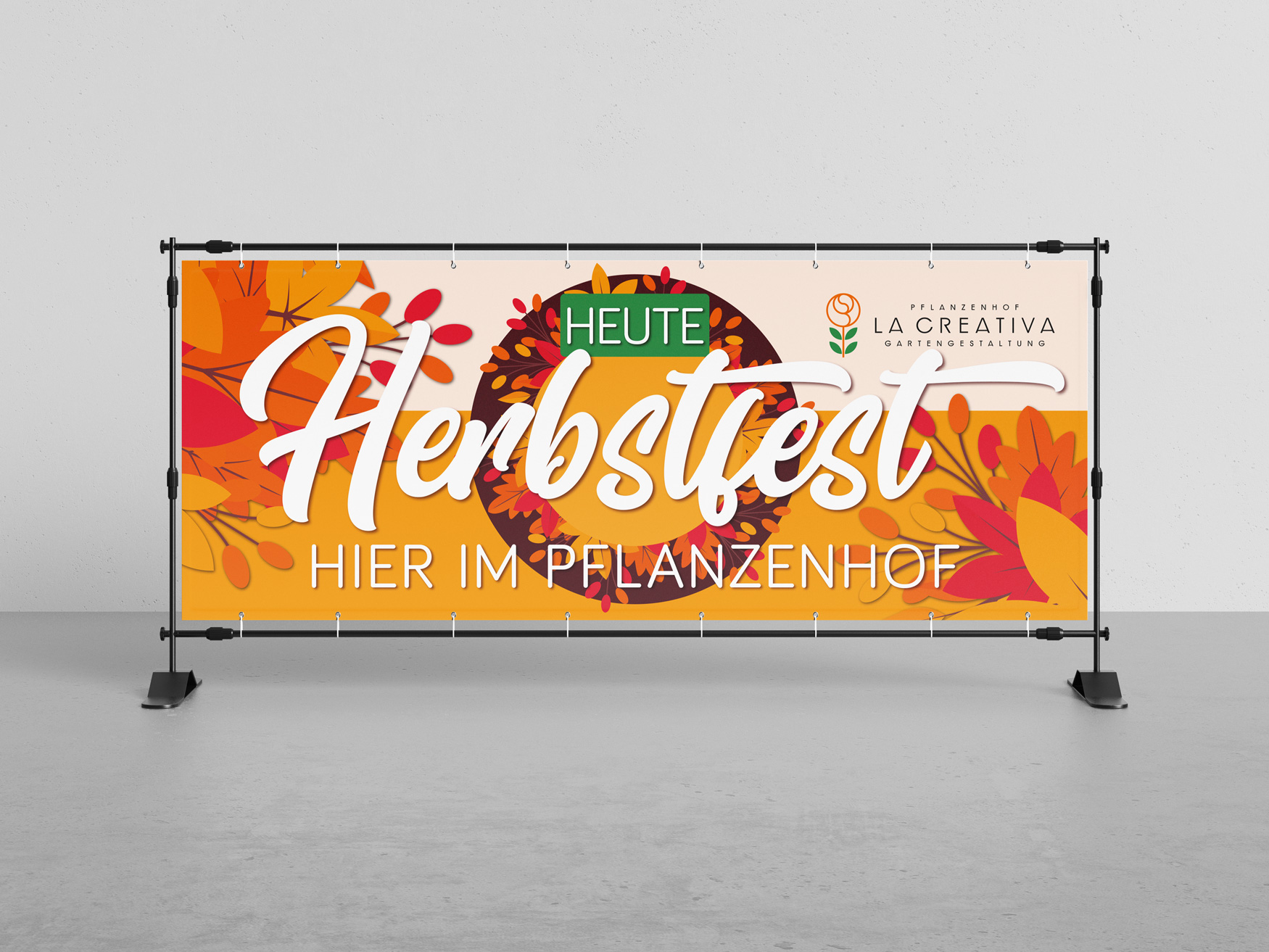

Professionally designed advertising banners, billboards and tarpaulins are therefore indispensable tools for attracting the attention of a broad target group, increasing brand awareness, appealing to local customers and gaining the trust of consumers. They are not only eye-catchers, but also powerful communication tools that strengthen a brand's image and play a key role in attracting potential customers and building long-term customer loyalty. Through their visual presence, they play a key role in ensuring a company's success in today's highly competitive market.
Would you like more information on this topic?
Discover my portfolio!
Mobile devices on the rise: How companies are adapting to new user habits
The way people access the internet is constantly changing and these changes have a significant impact on companies' online presence. Significant shifts in internet usage have been observed over the last two years, particularly in terms of the types of devices used.
This data provides insights into the percentage distribution of internet usage on desktop computers, smartphones and tablets in Germany over the period from September 2021 to September 2023. The values indicate the proportion of internet usage attributable to each device type - the figures provide interesting insights into user preferences (source: StatCounter).

Here is a brief analysis of this data:
- Desktop use:
The use of desktop computers is declining, from 58.44% in September 2021 to 55.38% in September 2023, which could indicate that people are increasingly switching to mobile devices to access the internet. - Mobile use:
The use of smartphones remains high and is increasing slightly, from 38.88% in September 2021 to 42.06% in September 2023. This underlines the continuing trend towards mobile internet use. - Tablet use:
Tablet usage remains relatively low compared to desktop and mobile, but fluctuates slightly between 2% and 3%. It seems that tablets are not as widely used as smartphones or desktop computers for accessing the internet.
Overall, the development of the data shows that desktop usage is decreasing, while mobile usage, particularly via smartphones, continues to increase. This is in line with global trends that show a shift towards mobile internet usage. It is important to note that these trends may be influenced by various factors such as improved mobile technologies, affordable smartphones and wider availability of mobile internet services.

Changes in internet usage have a direct impact on companies' online presence. Here are some thoughts on how companies can respond to these trends:
- Mobile optimisation:
With more and more people accessing the internet via mobile devices, it is crucial to ensure that the company website is optimised for mobile devices. The website should utilise responsive design to ensure an optimal user experience on smartphones and tablets. - Fast loading times:
Mobile users are often more impatient than desktop users. A fast website loading time is crucial to improve the user experience and ensure that visitors do not bounce due to long loading times. - Content optimisation:
Content should be optimised for mobile users. This means not only adapting texts and images, but also offering easily digestible content such as videos and short text sections that can be displayed well on small screens. - Security and data protection:
With the increase in mobile internet usage, awareness of security and data protection has also risen. Companies should ensure that their websites are secure and comply with data protection regulations in order to gain the trust of users. - Customer service and communication:
Mobile devices also offer new opportunities for customer service, be it via chat apps or social media. Companies can use mobile platforms to communicate directly with their customers and provide quick answers to questions or problems.
In many cases, a company's sector will play a role in Internet usage behaviour.

Online presence and adaptation to the changing habits of Internet users depend heavily on the type of business:
Company in the E-Commerce area often benefit greatly from the increase in mobile internet usage. With many people shopping online on mobile, e-commerce companies need to ensure that their websites and apps are optimised for mobile devices in order to remain competitive.
For local services such as hairdressers or restaurants, local search via mobile devices can be crucial. Customers often search for nearby services on their smartphones, so good visibility on mobile devices and positive online reviews are of great importance.
Companies that Media content must adapt to the habits of users who are increasingly using mobile devices to stream videos and music. This often requires the development of mobile apps and the optimisation of content for mobile devices.
For certain B2B (Business-to-Business) or in sectors such as management consultancy or legal advice, the importance of mobile internet use may be lower, as customers may be less likely to utilise these services via mobile devices. Nevertheless, online presence and accessibility via mobile devices can also be important here in order to appeal to potential customers.
Overall, it is crucial for companies to adapt to the changing habits of internet users. This means not only optimising for mobile devices, but also understanding the specific needs and expectations of the mobile target group. A user-friendly, fast and secure online presence is becoming increasingly important in order to remain competitive and provide a positive user experience.
Should we use these tips together?
I look forward to helping you further!
Tips & Tricks No. 17
In the "neunmalklug" section, I publish tips, tricks and technical information about graphic and web design at irregular intervals. Today:
Newsletters that convince your readers
Good newsletter examples can serve as inspiration for your own newsletter and help you to strengthen your customer loyalty and sell products through targeted email marketing. Before you get started, however, you should make a few important considerations:
- Define target group: Think about who you want to address - prospective customers, existing customers or potential new customers. Segment your contacts accordingly to provide relevant content.
- Offer added value: Varied content such as specialist knowledge, tutorials and company information together with product highlights and voucher codes make for an interesting newsletter.
- Choose the right tool: Use professional newsletter software that gives your brand a trustworthy and contemporary image and complies with data protection regulations.
Visual design is crucial:
- Sender and subject line: Create trust with a clear sender and an appealing, intriguing subject line. Emojis can also enhance the subject line.
- Use pre-header: This first line of the newsletter offers space for further information and an exciting hook. Avoid repetitions from the subject line.
- Design: An appealing header image, balanced image/text ratio, clear structure and a well-designed email signature and footer are crucial to arouse the recipient's interest.
A successful newsletter not only appeals, but also convinces visually and in terms of content - the perfect combination for a successful email marketing campaign.
9 imaginative examples of successful newsletter design
 Creative visuals: Inspire your subscribers with imaginative designs, be it with captivating header images or innovative graphics. The newsletter example, in which handwritten fonts and tempting tea offers harmonise, creates a unique connection. This personal touch gives your communication depth and sustainability. Show that details make the difference and create an unforgettable experience for your readers.
 Structured organisation: Design your newsletter carefully: an appealing header image and skilfully placed call-to-action buttons guide readers through the content. Think of a structured newsletter in which a consistent theme is followed like a red thread (here in yellow). This clear structure not only provides orientation, but also gives your newsletter an appealing and easy-to-understand form.
 Product presentation: Present your products with style: inviting header images and fresh colour palettes that run through the entire newsletter skilfully showcase your products. Let your offer shine in a visually appealing setting and capture the attention of your readers with a harmonious design.
 Animated highlights: Cleverly placed GIFs give your newsletter a dynamic touch without overloading it. Imagine an animated header graphic that comes to life with colourful accents. These subtle animations add a playful dimension to the newsletter while keeping readers intrigued. Use these creative elements to present your message in an innovative and appealing way.

 Gift ideas: Make it easier for your readers to find the perfect gift by presenting suitable ideas for different occasions. In the example, you can see compelling offers with winter motifs emphasised by clear and attractive images. These visual elements not only provide inspiration, but also create an emotional connection. Make it easy for your readers to celebrate special moments with your products!
 Versatile content: Establish a balanced variety of content and formats that go beyond pure product advertising. Creative ideas and relevant information are the key to deepening reader loyalty. Inspire your readers not only with products, but also with insights, tips and original ideas that offer added value. This will create a lasting relationship and keep your audience engaged and informed.
 Corporate Design: Ensure that your newsletter reflects the consistent image of your company. Your newsletter is like a mirror image of your brand in the corporate colours. Matching call-to-action buttons reinforce recognition and direct readers to relevant information. This coherent presentation not only strengthens your brand identity, but also promotes the trust of your subscribers by giving them a consistent and professional communication experience.
 Attractive product images: Use high-quality photos to visually emphasise your products - in the example of a cosmetics newsletter that impresses with aesthetic product images: the balanced ratio of images to text conveys what readers can expect in an appealing way - this also creates an emotional connection that inspires customers to buy. Use the power of images to communicate your message and attract the attention of your target group.
 Clear, modern design: A minimalist and straightforward design gives your newsletter a touch of luxury. In the last example, you can see high-quality images of living rooms which, together with discreet calls to action (CTA buttons), create an exclusive atmosphere. This layout not only creates visual pleasure, but also draws attention to relevant information. Discover the potential of an appealing design to present your message with a touch of elegance.
Website and/or social media?
Do I need a website or are social media profiles enough? The answer depends on various factors: A website offers freedom of design, can provide comprehensive information and is flexibly customisable. Social media profiles enable a greater reach, but require regular updating and can quickly overlap important information.
A website serves as a central point of contact for your company or brand in the digital space. These comprehensive features are limited on social media platforms, where information is often ephemeral and cannot be presented in the same structured way as on a dedicated website. Whilst social media platforms such as Facebook, Instagram or TikTok are useful for increasing your reach and engaging with your target audience, they generally offer fewer opportunities to present comprehensive information about your business. A website, on the other hand, can provide a comprehensive representation of your company, products or services and serve as a hub from which potential customers can get all the information they need.

With your own website, you have full control over the design, content and functionalities. Unlike social media platforms, where you are subject to the guidelines and changes of the platform operators, your website gives you the freedom to design and customise it entirely according to your own ideas. A professional website allows you to present your brand identity and branding consistently. You can create the design and colours to match your company exactly and create a uniform perception among visitors.
A website allows you to provide extensive content such as blog posts, product descriptions, testimonials, FAQs and much more. This allows you to showcase your expertise, inform your target audience and gain the trust of potential customers. With a customised website, you can include specific features and interactions that are relevant to your target audience and goals. This can range from customised contact forms to e-commerce functions and interactive elements.
A website offers you the best basis for targeted search engine optimisation (SEO). By optimising your website for search engines, you can increase your visibility in search results and gain organic traffic. Ranking in search results is crucial for many companies to attract new customers. A website makes it possible to take targeted SEO measures to improve visibility - companies can tailor their content and offers to their target groups. Through analysis and data, they can understand visitor behaviour and adapt their website accordingly to better meet the needs of their customers. The findings can be used to optimise the offer, adapt marketing strategies and improve customer service.
Social media platforms can change or adapt their guidelines, which can have a negative impact on a company's reach and visibility. With their own website, companies are less dependent on such changes and retain control over their online presence. A professional website is therefore a long-term investment for your company. While social media platforms and trends may change, your website will usually remain stable and provide you with a permanent presence on the internet.
Despite the existence of social media, a professionally designed website is still very important for companies. It acts as a central point of contact and provides comprehensive information about the company, which is limited on social media platforms. With its own website, the company retains control over design, content and functions, in contrast to the restrictions imposed by social media guidelines. The website enables consistent branding, extensive content such as blogs and testimonials, targeted search engine optimisation and individual interaction options. It also ensures data protection and independence from third-party providers, which is an advantage in an ever-changing digital landscape. Ultimately, having your own website gives companies freedom, control and flexibility in how they present their business online and is a long-term investment in their online presence. Companies that are only present on social media platforms often come across as less reputable. Social media can be supportive, but the website remains the central point of contact for a company in the digital space.
A website is therefore essential and should serve as the basis, while social media profiles can be a useful addition. The ideal strategy is to combine both and choose the right network for the target group.
Would you like more information on this topic?
Discover my portfolio!
Fresh on the net: Frey to the power of three!
For one of my most loyal customers I have successfully three customised landing pages which are specially designed for different product lines. These pages were specifically designed to optimally present the uniqueness and appeal of the respective devices. The design of the landing pages required a fine balance between a consistent design that emphasises the brand identity and an individual layout that highlights the uniqueness and appeal of the products. The key component is to skilfully integrate the brand guidelines and elements into the design, while leaving room for creative freedom to combine the best of both worlds:
The advantages of these customised landing pages are manifold. Firstly, they make it possible to address the target group precisely, as they provide the relevant information that potential customers are looking for. This leads to a higher conversion rate as visitors immediately find what they are looking for. Secondly, special attention was paid to optimising user-friendliness. The clear structure and appealing design ensure a pleasant user experience, which in turn increases the time spent on the pages. Thirdly, the landing pages are optimised for different screen sizes to ensure that they work optimally on all devices, be it desktop, tablet or smartphone.
For efficient navigation and an improved user experience, there is an additional top page with the function as a selection option for the three landing pages - also known as Splash page or hub page. It not only enables a clear and simple selection for visitors, but also contributes to a uniform design that strengthens the brand identity.
The benefits of this structure include ease of use, tracking of visitor behaviour, flexibility for future expansion and potential SEO improvements. The clear and intuitive navigation on the hub page ensures that visitors can easily find the information they are looking for, while also allowing for easy customisation for possible future additions to product lines.
- Centralised control: The top page acts as a central point of contact from which visitors can navigate to the various product lines. This enables a structured and targeted experience.
- User friendliness: The use of a selection option at the top makes it easy for visitors to select the desired product line. This contributes to improved user-friendliness.
- Standardised design: The top page can have a uniform design that reinforces the brand identity. From there, visitors can move seamlessly to the individual landing pages, creating a consistent overall image.
- Tracking and analyses: By using a central hub page, web designers can better track and analyse visitor behaviour. This enables a more detailed evaluation of which product lines are particularly popular or which page has the highest conversion rate.
- Flexibility for future expansions: If more product lines are added in the future, the top page can be easily customised to make room for the new options without having to redesign the entire website.
- SEO benefits: Using a hub page can help improve search engine optimisation by making the structure of the website clearer and linking the pages better together.
Visual magic: the fascinating world of halftone images
Interesting insights into the creation of visual elements, especially in relation to halftone images and their application in graphic design and printing technology: this colourful video provides a better understanding of the technical aspects and creative evolution of halftone images.
Many thanks and good wishes ...
Dear customers, friends and business partners,
As the year draws to a close, it is time to pause and look back on all the projects and creative moments we have shared. Your support and collaboration have made this year special. A big thank you for your trust and the exciting challenges we have overcome together. I look forward to working with you again next year to realise innovative ideas and grow together.
Merry Christmas and a creative, successful 2024!
Tips & Tricks No. 18
In the "neunmalklug" section, I publish tips, tricks and technical information about graphic and web design at irregular intervals. Today:
9 terms that have made it from typography & printing technology into everyday language
- CopyIn classical letterpress printing, an impression was a first proof or a simple test print (the material to be printed was placed on the inked printing plate and usually tapped with a brush, whereby the printing ink clapped off onto the sheet). Today, the word is used to describe an inferior copy or imitation.
- ClichéCliché: Originally, it was a printing term for a printing plate that was used to create identical copies of an original. This is why "cliché" is also used today in a figurative sense to describe stereotypical ideas or entrenched opinions.
- LapidaryOriginally a simple font, also known as "lapidary script" (from the Latin "lapis" for "stone"). In everyday language, "lapidary" is used to express something succinctly and with little embellishment.
- Waste paperIn the printing industry, "waste" refers to unusable or faulty printed copies (from the Latin word maculatura: "the stained"). In the vernacular, it is used to refer to something superfluous or scrap material.
- MarginaliaIn typography, a marginalia refers to a note in the margin or a marginal note (marginalis: "concerning the margin"). In everyday language, the term is used for a triviality or an unimportant note.
- Matrix: A stamp used for casting fonts. Today it is often used as a synonym for "foundation" or "base".
- CategoryThe term rubric comes from the red (Latin: rubrum) colour that was used in religious books to mark instructions for the liturgy and was also used for headings and other structural elements, i.e. it denotes a heading or keyword that identifies a specific area of content. In everyday language, the term "rubric" is used for a category or section.
- StereotypeStereotyping refers to the process of moulding and reproducing typesetting or printing blocks. In common parlance, the term, like cliché, has come to epitomise entrenched ideas, which in the case of stereotype primarily stand for simplifications and prejudices.
- Type caseIn typography, a type case refers to a tool used to set type - the many lead letters lay sorted in the small compartments of wooden boxes. Today, the term is used for a decorative collection of objects in small wooden compartments.
Corporate design, visual identity and style guide
As a graphic designer, it is important for me to explain terms such as corporate design, visual identity and style guide to my clients, because a common understanding forms the basis for successful projects. Clarity about these concepts not only enables more effective communication, but also promotes informed decision-making and builds trust between me and my clients. This contributes to better collaboration, high-quality designs and long-term client relationships.
Corporate Design (CD) refers to the visual identity of a company, including all aspects that make it visually unique. It includes specifications for images and graphic elements that customers perceive of the brand, from logos to shop fittings. CD creates a clear visual identity and differentiates the company from other brands.
The visual identity represents all the visual elements of a brand. A professional visual identity is crucial as it is the face of the company and makes the first impression on potential customers. It goes beyond logos and colours; it should offer a convincing representation of the brand's core values and unique selling points.
Why a professional visual identity is important
- Differentiation: In a crowded market, it emphasises the brand and makes it easier for customers to remember.
- Credibility and trust: A professional identity conveys reliability and credibility, which arouses the interest of consumers.
- Consistency: It creates a consistent brand experience across different platforms and ensures instant recognition.
- Emotional connection: An effective identity builds an emotional bond and promotes customer loyalty.
- Communication of values: It can convey the values, mission and personality of the company, which promotes identification with the brand.
Building an effective visual identity
- Definition of the brand: Clear definition of core values, mission and target group for a precise visual representation.
- Unforgettable logo: Design of a simple, versatile and easily recognisable logo.
- Select colour palette: Selection of colours that match the personality of the brand and are visually appealing.
- Typography: Choose consistent fonts that reflect the brand and are easy to read.
- Creation of brand guidelines: Create a comprehensive set of rules to ensure consistent branding.
- Use high-quality images: Use of images that match the values of the brand and appeal to the target group.
- Maintain consistency: Ensure a uniform appearance across all platforms.
- Adaptation and further development: The identity should evolve as the company grows in order to remain relevant.
A Style Guide is a practical document that provides specific instructions on the correct application of the corporate design. It serves as a reference tool and ensures that everyone involved works consistently and uses the corporate design in accordance with the defined standards.
You could also say that corporate design is the "what" (the visual identity), while the style guide is the "how" (the instructions on how to apply the corporate design correctly). Both are crucial to ensure that a brand is presented consistently and professionally.
Successful examples
- Apple Inc: Known for minimalism, elegance and innovation, the bitten apple logo has represented these values for decades.
- Coca-Cola: The iconic red and white logo conveys tradition and nostalgia, echoing the brand's long history.
- Airbnb: The brand symbolises modernity and inclusivity, with a logo that combines a heart and a place mark.
To summarise, a professional visual identity is crucial in order to stand out in a highly competitive market. It serves as a recognisable feature, builds trust, creates emotional connections and communicates the brand's values. Continuity and adaptability are key to building a strong and recognisable brand.
New logo for Metallbau Steinhof
The young business owner of Metallbau Steinhof was looking for a logo that would consciously stand out from the usual clichés such as tools, screws, hammers and anvils or even a welder. Instead, we wanted to pursue a more contemporary approach together. The result is a figurative mark made up of spatially arranged lines that reflects the versatility of the company's services - from doors, gates and railings to steel structures.
Such a modern, abstract logo made of lines offers numerous advantages, including a contemporary appearance, versatility in interpretation, the ability to create a unique brand image, a reduced, clear aesthetic and flexibility in various applications. It helps to create a contemporary, versatile and memorable brand identity.
Visual persuasiveness: outdoor advertising with banners and tarpaulins
Advertising banners, billboards and tarpaulins play a crucial role in a company's advertising strategy. These forms of outdoor advertising are important because they appeal to a broad target group, remain in the memory of potential customers and increase brand awareness.
Here are some reasons why these advertising media are important for companies:
- Reach and visibility
Large billboards and advertising banners are often placed in highly frequented locations, such as on main roads or in shopping centres. They therefore reach a large number of people, both pedestrians and motorists. This broad visibility is crucial for reaching potential customers and increasing brand awareness. - Attract attention
Large and eye-catching advertising banners attract the attention of passers-by. Creative design, vibrant colours and interesting messages can help to make people stop and take a closer look at the advertisement. An appealing advert sticks in people's minds, making it more likely that they will remember the advertised company later. - Addressing local target groups
Large billboards and banners are particularly effective for local companies as they can specifically address local target groups. People in the immediate vicinity become aware of the company and are more likely to visit the shop or make use of the advertised product or service. - Flexibility and creativity
Advertising tarpaulins and banners offer companies the opportunity to be creative and communicate different messages. They can advertise seasonal offers, draw attention to special promotions or present new products. This flexibility allows companies to adapt their advertising messages to current needs and trends. - Creating credibility and trust
For many people, well-placed and professionally designed advertising banners radiate seriousness and trustworthiness. Companies that invest in high-quality advertising are often perceived as established and reliable. This can boost the confidence of potential customers and encourage them to try out the advertised company's products or services.
Professionally designed advertising banners, billboards and tarpaulins are therefore indispensable tools for attracting the attention of a broad target group, increasing brand awareness, appealing to local customers and gaining the trust of consumers. They are not only eye-catchers, but also powerful communication tools that strengthen a brand's image and play a key role in attracting potential customers and building long-term customer loyalty. Through their visual presence, they play a key role in ensuring a company's success in today's highly competitive market.
Would you like more information on this topic?
Discover my portfolio!
Mobile devices on the rise: How companies are adapting to new user habits
The way people access the internet is constantly changing and these changes have a significant impact on companies' online presence. Significant shifts in internet usage have been observed over the last two years, particularly in terms of the types of devices used.
This data provides insights into the percentage distribution of internet usage on desktop computers, smartphones and tablets in Germany over the period from September 2021 to September 2023. The values indicate the proportion of internet usage attributable to each device type - the figures provide interesting insights into user preferences (source: StatCounter).
Here is a brief analysis of this data:
- Desktop use:
The use of desktop computers is declining, from 58.44% in September 2021 to 55.38% in September 2023, which could indicate that people are increasingly switching to mobile devices to access the internet. - Mobile use:
The use of smartphones remains high and is increasing slightly, from 38.88% in September 2021 to 42.06% in September 2023. This underlines the continuing trend towards mobile internet use. - Tablet use:
Tablet usage remains relatively low compared to desktop and mobile, but fluctuates slightly between 2% and 3%. It seems that tablets are not as widely used as smartphones or desktop computers for accessing the internet.
Overall, the development of the data shows that desktop usage is decreasing, while mobile usage, particularly via smartphones, continues to increase. This is in line with global trends that show a shift towards mobile internet usage. It is important to note that these trends may be influenced by various factors such as improved mobile technologies, affordable smartphones and wider availability of mobile internet services.
Changes in internet usage have a direct impact on companies' online presence. Here are some thoughts on how companies can respond to these trends:
- Mobile optimisation:
With more and more people accessing the internet via mobile devices, it is crucial to ensure that the company website is optimised for mobile devices. The website should utilise responsive design to ensure an optimal user experience on smartphones and tablets. - Fast loading times:
Mobile users are often more impatient than desktop users. A fast website loading time is crucial to improve the user experience and ensure that visitors do not bounce due to long loading times. - Content optimisation:
Content should be optimised for mobile users. This means not only adapting texts and images, but also offering easily digestible content such as videos and short text sections that can be displayed well on small screens. - Security and data protection:
With the increase in mobile internet usage, awareness of security and data protection has also risen. Companies should ensure that their websites are secure and comply with data protection regulations in order to gain the trust of users. - Customer service and communication:
Mobile devices also offer new opportunities for customer service, be it via chat apps or social media. Companies can use mobile platforms to communicate directly with their customers and provide quick answers to questions or problems.
In many cases, a company's sector will play a role in Internet usage behaviour.
Online presence and adaptation to the changing habits of Internet users depend heavily on the type of business:
Company in the E-Commerce area often benefit greatly from the increase in mobile internet usage. With many people shopping online on mobile, e-commerce companies need to ensure that their websites and apps are optimised for mobile devices in order to remain competitive.
For local services such as hairdressers or restaurants, local search via mobile devices can be crucial. Customers often search for nearby services on their smartphones, so good visibility on mobile devices and positive online reviews are of great importance.
Companies that Media content must adapt to the habits of users who are increasingly using mobile devices to stream videos and music. This often requires the development of mobile apps and the optimisation of content for mobile devices.
For certain B2B (Business-to-Business) or in sectors such as management consultancy or legal advice, the importance of mobile internet use may be lower, as customers may be less likely to utilise these services via mobile devices. Nevertheless, online presence and accessibility via mobile devices can also be important here in order to appeal to potential customers.
Overall, it is crucial for companies to adapt to the changing habits of internet users. This means not only optimising for mobile devices, but also understanding the specific needs and expectations of the mobile target group. A user-friendly, fast and secure online presence is becoming increasingly important in order to remain competitive and provide a positive user experience.
Should we use these tips together?
I look forward to helping you further!
Tips & Tricks No. 17
In the "neunmalklug" section, I publish tips, tricks and technical information about graphic and web design at irregular intervals. Today:
Newsletters that convince your readers
Good newsletter examples can serve as inspiration for your own newsletter and help you to strengthen your customer loyalty and sell products through targeted email marketing. Before you get started, however, you should make a few important considerations:
- Define target group: Think about who you want to address - prospective customers, existing customers or potential new customers. Segment your contacts accordingly to provide relevant content.
- Offer added value: Varied content such as specialist knowledge, tutorials and company information together with product highlights and voucher codes make for an interesting newsletter.
- Choose the right tool: Use professional newsletter software that gives your brand a trustworthy and contemporary image and complies with data protection regulations.
Visual design is crucial:
- Sender and subject line: Create trust with a clear sender and an appealing, intriguing subject line. Emojis can also enhance the subject line.
- Use pre-header: This first line of the newsletter offers space for further information and an exciting hook. Avoid repetitions from the subject line.
- Design: An appealing header image, balanced image/text ratio, clear structure and a well-designed email signature and footer are crucial to arouse the recipient's interest.
A successful newsletter not only appeals, but also convinces visually and in terms of content - the perfect combination for a successful email marketing campaign.
9 imaginative examples of successful newsletter design
- Creative visuals: Inspire your subscribers with imaginative designs, be it with captivating header images or innovative graphics. The newsletter example, in which handwritten fonts and tempting tea offers harmonise, creates a unique connection. This personal touch gives your communication depth and sustainability. Show that details make the difference and create an unforgettable experience for your readers.
- Structured organisation: Design your newsletter carefully: an appealing header image and skilfully placed call-to-action buttons guide readers through the content. Think of a structured newsletter in which a consistent theme is followed like a red thread (here in yellow). This clear structure not only provides orientation, but also gives your newsletter an appealing and easy-to-understand form.
- Product presentation: Present your products with style: inviting header images and fresh colour palettes that run through the entire newsletter skilfully showcase your products. Let your offer shine in a visually appealing setting and capture the attention of your readers with a harmonious design.
- Animated highlights: Cleverly placed GIFs give your newsletter a dynamic touch without overloading it. Imagine an animated header graphic that comes to life with colourful accents. These subtle animations add a playful dimension to the newsletter while keeping readers intrigued. Use these creative elements to present your message in an innovative and appealing way.
- Gift ideas: Make it easier for your readers to find the perfect gift by presenting suitable ideas for different occasions. In the example, you can see compelling offers with winter motifs emphasised by clear and attractive images. These visual elements not only provide inspiration, but also create an emotional connection. Make it easy for your readers to celebrate special moments with your products!
- Versatile content: Establish a balanced variety of content and formats that go beyond pure product advertising. Creative ideas and relevant information are the key to deepening reader loyalty. Inspire your readers not only with products, but also with insights, tips and original ideas that offer added value. This will create a lasting relationship and keep your audience engaged and informed.
- Corporate Design: Ensure that your newsletter reflects the consistent image of your company. Your newsletter is like a mirror image of your brand in the corporate colours. Matching call-to-action buttons reinforce recognition and direct readers to relevant information. This coherent presentation not only strengthens your brand identity, but also promotes the trust of your subscribers by giving them a consistent and professional communication experience.
- Attractive product images: Use high-quality photos to visually emphasise your products - in the example of a cosmetics newsletter that impresses with aesthetic product images: the balanced ratio of images to text conveys what readers can expect in an appealing way - this also creates an emotional connection that inspires customers to buy. Use the power of images to communicate your message and attract the attention of your target group.
- Clear, modern design: A minimalist and straightforward design gives your newsletter a touch of luxury. In the last example, you can see high-quality images of living rooms which, together with discreet calls to action (CTA buttons), create an exclusive atmosphere. This layout not only creates visual pleasure, but also draws attention to relevant information. Discover the potential of an appealing design to present your message with a touch of elegance.
Website and/or social media?
Do I need a website or are social media profiles enough? The answer depends on various factors: A website offers freedom of design, can provide comprehensive information and is flexibly customisable. Social media profiles enable a greater reach, but require regular updating and can quickly overlap important information.
A website serves as a central point of contact for your company or brand in the digital space. These comprehensive features are limited on social media platforms, where information is often ephemeral and cannot be presented in the same structured way as on a dedicated website. Whilst social media platforms such as Facebook, Instagram or TikTok are useful for increasing your reach and engaging with your target audience, they generally offer fewer opportunities to present comprehensive information about your business. A website, on the other hand, can provide a comprehensive representation of your company, products or services and serve as a hub from which potential customers can get all the information they need.
With your own website, you have full control over the design, content and functionalities. Unlike social media platforms, where you are subject to the guidelines and changes of the platform operators, your website gives you the freedom to design and customise it entirely according to your own ideas. A professional website allows you to present your brand identity and branding consistently. You can create the design and colours to match your company exactly and create a uniform perception among visitors.
A website allows you to provide extensive content such as blog posts, product descriptions, testimonials, FAQs and much more. This allows you to showcase your expertise, inform your target audience and gain the trust of potential customers. With a customised website, you can include specific features and interactions that are relevant to your target audience and goals. This can range from customised contact forms to e-commerce functions and interactive elements.
A website offers you the best basis for targeted search engine optimisation (SEO). By optimising your website for search engines, you can increase your visibility in search results and gain organic traffic. Ranking in search results is crucial for many companies to attract new customers. A website makes it possible to take targeted SEO measures to improve visibility - companies can tailor their content and offers to their target groups. Through analysis and data, they can understand visitor behaviour and adapt their website accordingly to better meet the needs of their customers. The findings can be used to optimise the offer, adapt marketing strategies and improve customer service.
Social media platforms can change or adapt their guidelines, which can have a negative impact on a company's reach and visibility. With their own website, companies are less dependent on such changes and retain control over their online presence. A professional website is therefore a long-term investment for your company. While social media platforms and trends may change, your website will usually remain stable and provide you with a permanent presence on the internet.
Despite the existence of social media, a professionally designed website is still very important for companies. It acts as a central point of contact and provides comprehensive information about the company, which is limited on social media platforms. With its own website, the company retains control over design, content and functions, in contrast to the restrictions imposed by social media guidelines. The website enables consistent branding, extensive content such as blogs and testimonials, targeted search engine optimisation and individual interaction options. It also ensures data protection and independence from third-party providers, which is an advantage in an ever-changing digital landscape. Ultimately, having your own website gives companies freedom, control and flexibility in how they present their business online and is a long-term investment in their online presence. Companies that are only present on social media platforms often come across as less reputable. Social media can be supportive, but the website remains the central point of contact for a company in the digital space.
A website is therefore essential and should serve as the basis, while social media profiles can be a useful addition. The ideal strategy is to combine both and choose the right network for the target group.
Would you like more information on this topic?
Discover my portfolio!
All logos/proprietary names/trademarks and graphics/photos shown are for illustration and reference purposes only and are the sole property of the respective owner/originator or copyright holder. The inclusion of hyperlinks to external sites is, as is usual on the Internet, for reference purposes only and does not constitute a recommendation or endorsement of the respective offer by vh-crossmedia | Volker Heupel. Liability, in particular for any damage or consequences arising from the use of the offer, is excluded - vh-crossmedia | Volker Heupel is not responsible for the content of websites to which direct or indirect reference is made via links. If, in your opinion, there is questionable content or content that violates applicable law, please inform me so that the relevant information can be updated or removed.

 Deutsch
 English (UK)
 Nederlands